The Second Viewing: What Property Photos Cannot Tell You
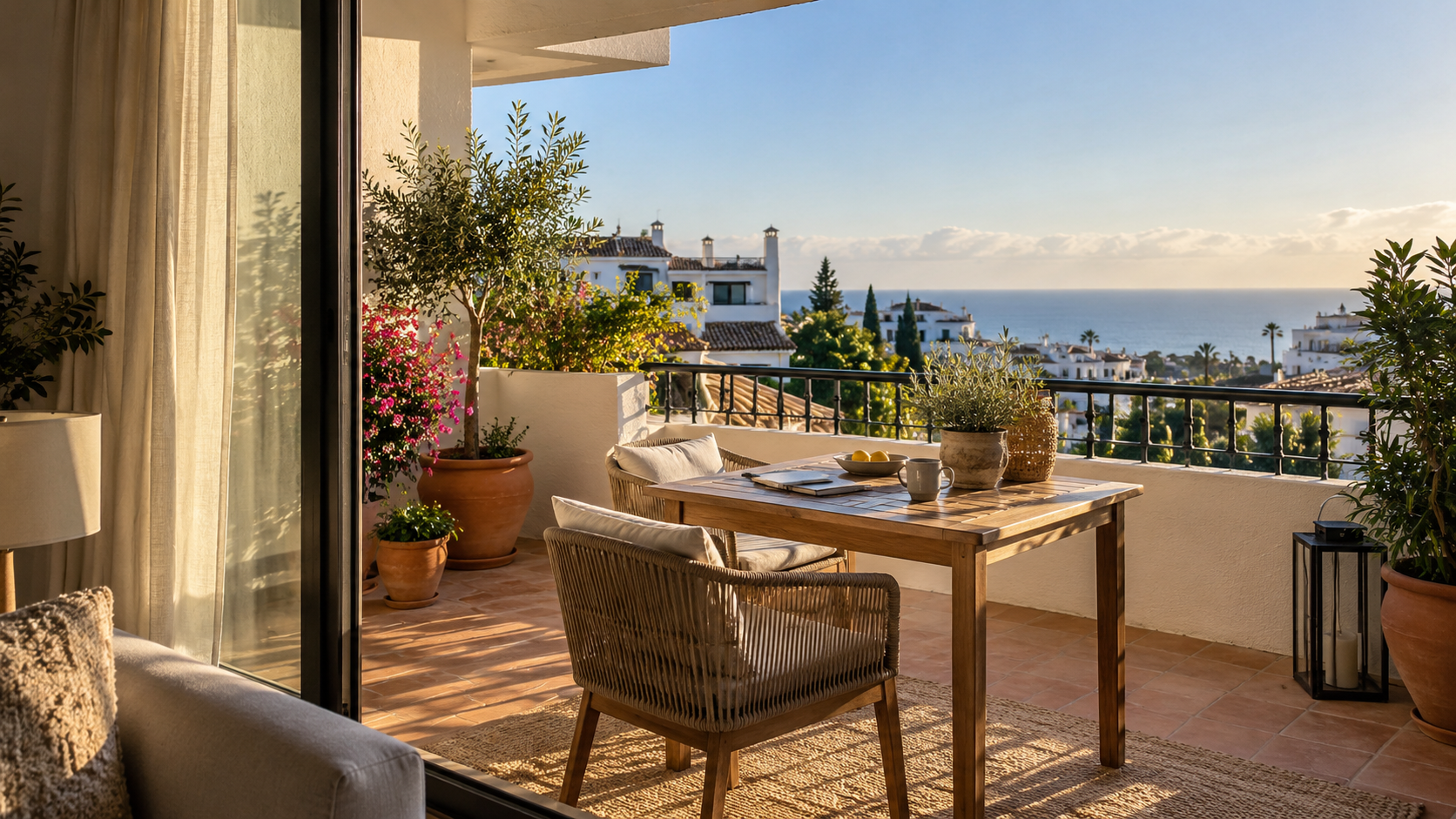
The first viewing shows you the home. The second helps you understand what living there might actually feel like.
A beautiful terrace photograph can tell you a great deal about a property. It can show the outlook, the space and the light at one particular moment. It cannot tell you how much sun reaches that terrace in winter, whether you hear the road from your bedroom, or what the view looks like when you sit down rather than stand at the edge of the balcony.
That is why we encourage serious buyers to visit a property again before making a final decision. The second viewing is less about the initial impression and more about the details that shape daily life.
Visit at a different time
If your first appointment was in the morning, try to return in the afternoon, or the other way around. Pay attention to where the sun falls in the living room and on the terrace. A south-facing home can still have shaded outdoor areas because of an overhang, neighbouring building or the shape of the terrace itself. Equally, shade can be welcome in August. The useful question is whether the balance suits how you intend to use the home throughout the year.
Traffic and neighbourhood activity can also change considerably over a day. Open the windows. Spend a quiet minute in the main bedroom and outside. Listen for roads, neighbouring terraces, maintenance work and anything else you would notice regularly.
Test the spaces as you would use them
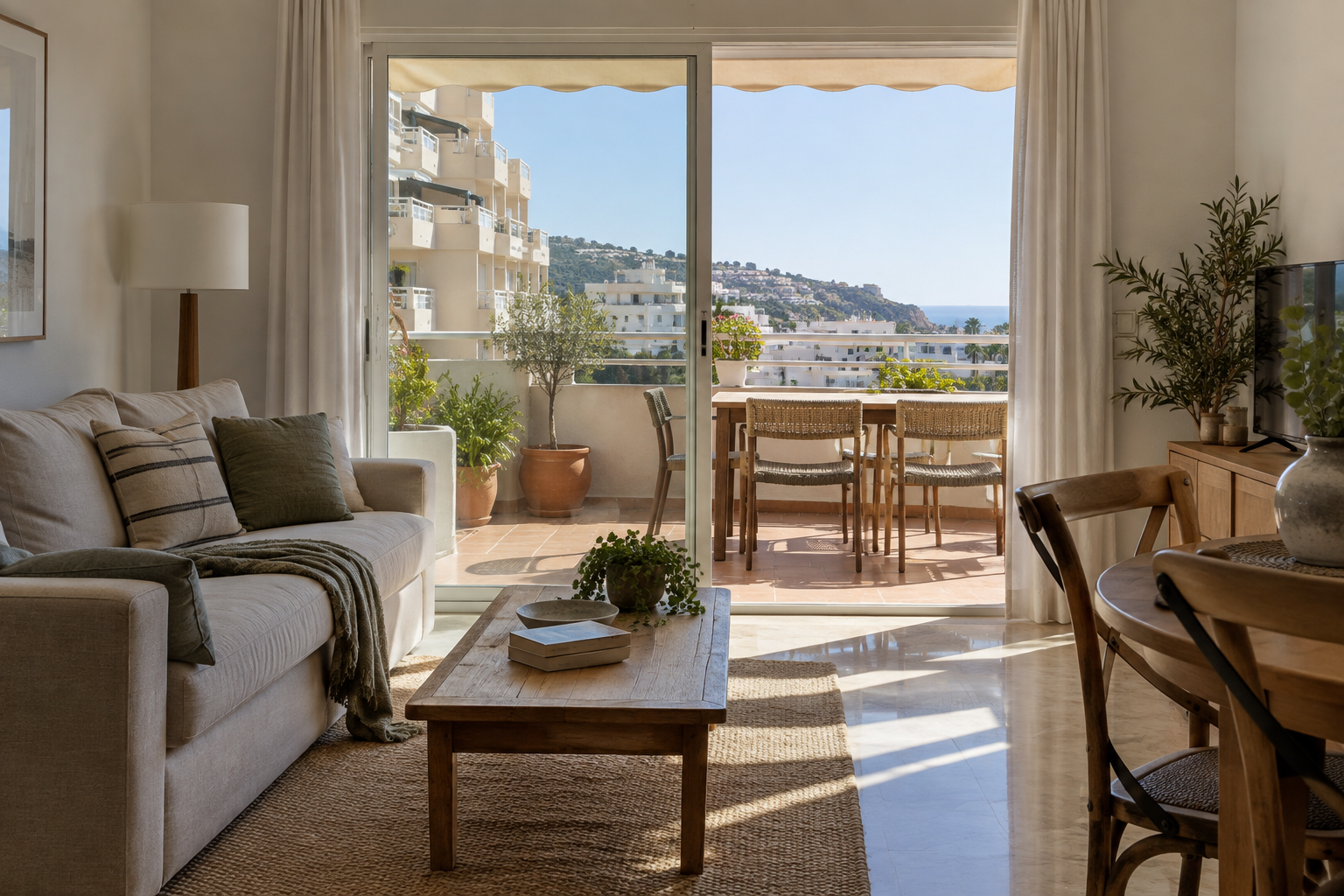
Walk through an ordinary day rather than another guided tour. Where would you have breakfast? Can you comfortably fit a dining table on the terrace without blocking the doors? Is there a place for coats, luggage, golf clubs or children's things? If you plan to work from home, sit where the desk would go and check the light, privacy and connection.
Look at the view from the sofa and the dining table, not only from the best camera angle. Check the sightlines from neighbouring homes into the rooms and outdoor areas that matter most to you.
Look beyond the apartment or villa
The route from the parking space to the front door matters when you are carrying shopping. So do lifts, stairs, entrances, communal gardens and the condition of shared facilities. In a development, ask which amenities belong to the community, what the current community fees cover and whether any significant works are planned. The answer should be checked against the community documents during due diligence.
Take a short walk or drive around the immediate area. Test the journey to the places you would actually use: the beach, school, supermarket or motorway. A location that feels remote on a map may be convenient in practice; the reverse can also be true at busy times.
Keep observation separate from verification
A second viewing can tell you how a property feels and functions. It cannot establish whether an extension has the correct permissions, what is recorded in the title, or whether a rental use is allowed. Those questions need documents and professional checks. Make a note of what you observe, what the seller or agent tells you, and what still needs to be verified.
A good second viewing may reinforce your first impression. It may also reveal a compromise you can happily accept, or one you cannot. Either outcome is useful. The aim is to choose a home with your eyes open, based on the way you will live in it rather than on the strongest photograph.
Considering a property on the Costa del Sol? We can arrange a second viewing and help you identify the questions worth checking before you commit.
Images are illustrative and do not depict a property currently for sale.